
Navigating the complexities of medical coding can sometimes feel like deciphering a foreign language. Among the myriad codes, CPT Code 99213 stands out as a cornerstone for many healthcare providers. Whether you’re a seasoned practitioner or just starting your journey, understanding when and how to use this specific code is essential for accurate billing and optimal patient care.
CPT Code 99213 pertains to established patients with moderate complexity issues, making it one of the most commonly used codes in primary care settings. But what does that really mean? How do you ensure you’re using it correctly without falling into common pitfalls? Let’s dive deeper into everything you need to know about CPT Code 99213 and its vital role in your practice.
What is CPT Code 99213?
CPT Code 99213 is a specific code used in medical billing and coding. It refers to an outpatient office visit for established patients that require a moderate level of complexity.
This code typically represents encounters where the patient has ongoing health concerns. The physician usually performs an evaluation and management (E/M) service during these visits.
The time spent with the patient or the nature of their presenting problem can dictate its use. It’s common in primary care settings, addressing issues like chronic disease management or minor acute conditions.
Understanding this code helps healthcare providers ensure proper reimbursement while maintaining accurate records of patient care. Proper utilization supports both effective communication within the healthcare team and clarity in documentation.
Understanding the Components of CPT Code 99213
CPT Code 99213 is a critical component of outpatient evaluation and management services. It signifies an office visit for an established patient, typically requiring moderate complexity.
To properly utilize this code, practitioners must understand its components. These include the patient’s history, examination findings, and medical decision-making processes.
For a successful billing process under CPT 99213, you need to document at least two of these three key elements: a problem-focused or expanded problem-focused history, a corresponding examination level that matches the complexity of care provided, and medical decision-making that is straightforward to low complexity.
Each aspect contributes to demonstrating the care’s necessity. Failing to align documentation with these requirements can lead to claim denials or reimbursements below expectations, emphasizing accuracy in your record-keeping practices.
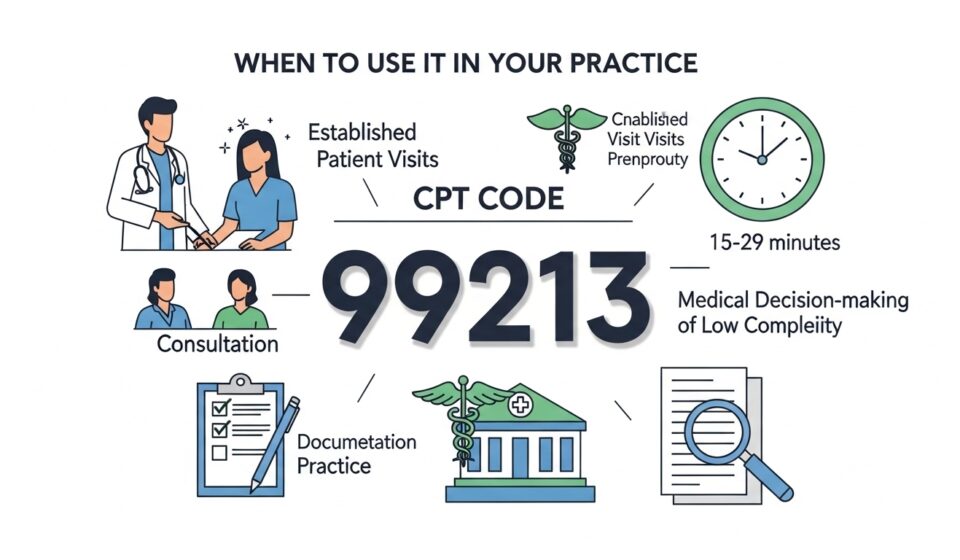
When to Use CPT Code 99213 in Your Practice
CPT Code 99213 is designed for established patients presenting with a moderate level of complexity. This code typically applies when the physician spends around 15 to 29 minutes face-to-face with the patient.
Utilize this code when addressing multiple chronic conditions or new issues that require some management. Examples include follow-ups on hypertension, diabetes, or anxiety where medication adjustments might be necessary.
It’s crucial to ensure that your documentation reflects medical decision-making of low complexity. If the patient’s condition demands more in-depth analysis or higher-level interventions, consider using a different CPT code instead.
Remember to assess not only clinical factors but also any relevant social determinants impacting health outcomes. These considerations can guide your coding decisions and improve patient care significantly.
Common Mistakes to Avoid When Using CPT Code 99213
When utilizing CPT code 99213, precision is vital. One common mistake practitioners make is underestimating the complexity of patient encounters. Documenting a simple visit as moderate can lead to denials.
Another frequent error involves inadequate documentation. Failing to provide detailed notes on medical decision-making or history could jeopardize reimbursement.
Using the wrong billing modifiers also presents challenges. Ensure you apply appropriate modifiers when necessary to avoid confusion with payers.
Don’t forget about time-based coding errors. If your encounter primarily revolves around counseling or coordination of care, ensure that time spent aligns with billed codes.
By being mindful of these pitfalls, you enhance your practice’s efficiency and improve revenue cycle management significantly.
Tips for Accurate Documentation and Billing with CPT Code 99213
Accurate documentation is crucial when billing with CPT code 99213. Start by ensuring that the patient’s medical history and reason for the visit are thoroughly recorded. This sets a strong foundation for your coding.
Next, focus on capturing the details of the examination. Note any relevant findings and assessments related to their condition. Comprehensive notes support your choice of this specific code.
Don’t forget to document time spent with the patient, especially if counseling or coordination of care takes up a significant portion of the visit. It adds weight to your billing claim.
Always double-check against payer guidelines for CPT code 99213 requirements; they can vary between insurers. Regularly reviewing these nuances can help prevent denials and ensure smooth reimbursements.
Consider utilizing templates designed for 99213 visits to streamline documentation while maintaining accuracy in every note you create.
Other Factors to Consider When Choosing a CPT Code
Choosing the right CPT code involves more than just matching a number to a service. Consider the patient’s complexity and specific medical history. This can impact not only coding but also treatment plans.
Billing guidelines are another crucial factor. Different insurers may have varying requirements for what constitutes appropriate documentation and coding practices. Familiarizing yourself with these differences can save time and prevent claim denials.
Additionally, take into account your practice’s specialty. Certain codes may be more relevant to specific fields like pediatrics or geriatrics, affecting how you document visits.
Stay updated with any changes in billing regulations or insurance policies as they evolve frequently. Keeping abreast of industry updates will ensure compliance and accuracy in your coding efforts.
Consider the patient population you serve. Their demographics might influence which services are typically rendered, requiring careful attention when selecting codes for accurate representation of care provided.
Conclusion
CPT code 99213 serves a vital role in the healthcare billing process. Understanding its components, appropriate usage, and documentation requirements can significantly enhance both patient care and practice revenue.
This code is specifically designed for established patients with moderate complexity medical issues. When you adhere to the criteria for using CPT code 99213, you ensure accurate reimbursement while also providing quality care.
Avoiding common mistakes such as misclassifying visits or failing to document thoroughly can prevent costly errors. Staying informed about changes in guidelines and ensuring your team understands proper coding practices will keep your practice running smoothly.
Keep an eye on other factors that might influence your choice of CPT codes. Patient history, time spent during visits, and specific services rendered all play a critical role in selecting the correct code.
Being diligent with this knowledge not only streamlines billing processes but also fosters trust between you and your patients by ensuring they receive optimal care aligned with their needs. Embracing these best practices sets a solid foundation for success within any healthcare practice focused on delivering exceptional service.